Featured guide · September 2026

HighLevel vs Votel SaaS configurator.

A practical comparison of the controls behind your SaaS offer, with the real question in view: can your plan say exactly what you sell?

See the test offer7 focused checks · interface evidence included

HighLevel

Shared credit

Plan balanceCREDIT
Email markup+
Phone markup+

Votel

Service rules

Email allowance10,000
Email after limitBILL
SMS after limitBLOCK
The controls behind the customer promise

TEST OFFER

Standard plan
Snapshot/rebuild, 10,000 emails/month and 1,000 US SMS/month.

CRITICAL RULE

Different actions per service
Bill excess email, then block excess SMS.

METHOD

Live configurator walkthroughs
No plan was published during this comparison.

01 · THE TEST OFFER

Can the plan say exactly what the sales page says?

We tested a plan that makes two different messaging promises.

  • Included:
    10,000 emails/month
  • After email limit:
    Bill overage
  • Included:
    1,000 US SMS/month
    After limit: block usage

02 · CREDIT VS ENTITLEMENT

HighLevel starts with shared credit; Votel adds service rows.

The difference is whether the plan can describe a balance and a fixed allowance for a named service.

HighLevel

Best for: a base plan plus a shared balance.

  • • One-time or recurring complimentary credit
  • • Optional rollover
  • • Usage-area markup for Email and Phone System

Constraint for this test: the reviewed flow does not place separate Email and SMS unit allowances next to the credit control.
Votel

Best for: credit plus named service allowances.

  • • Account credit remains available
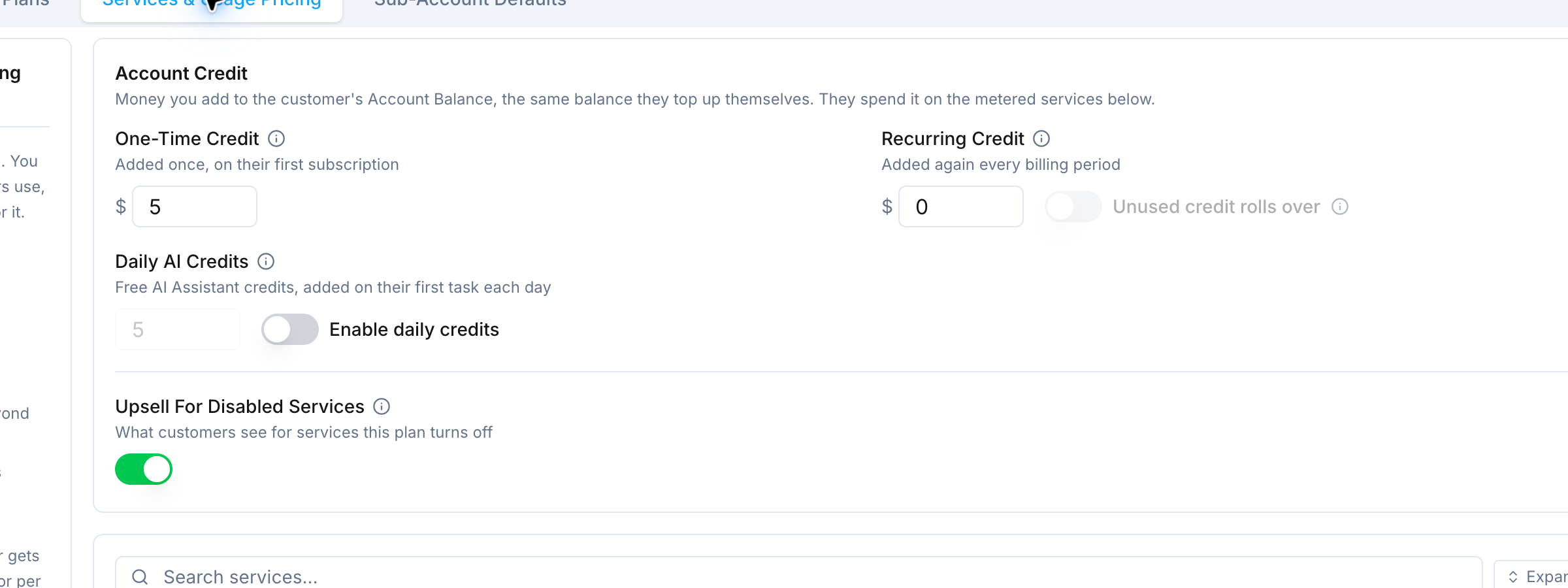
  • • Service-level included quantity is adjacent
  • • Quantity can be monthly or lifetime

Result for this test: general credit can coexist with a stated, enforceable unit allowance.

Zoomed Votel SaaS plan screen showing Account Credit above the Services and Usage Pricing table
Evidence: Votel’s account-credit control. One-time and recurring credit are visible above the service table, rather than being the only usage mechanism.

03 · LIMIT BEHAVIOUR

Can one service bill while another stops?

This is the deciding requirement in our test.

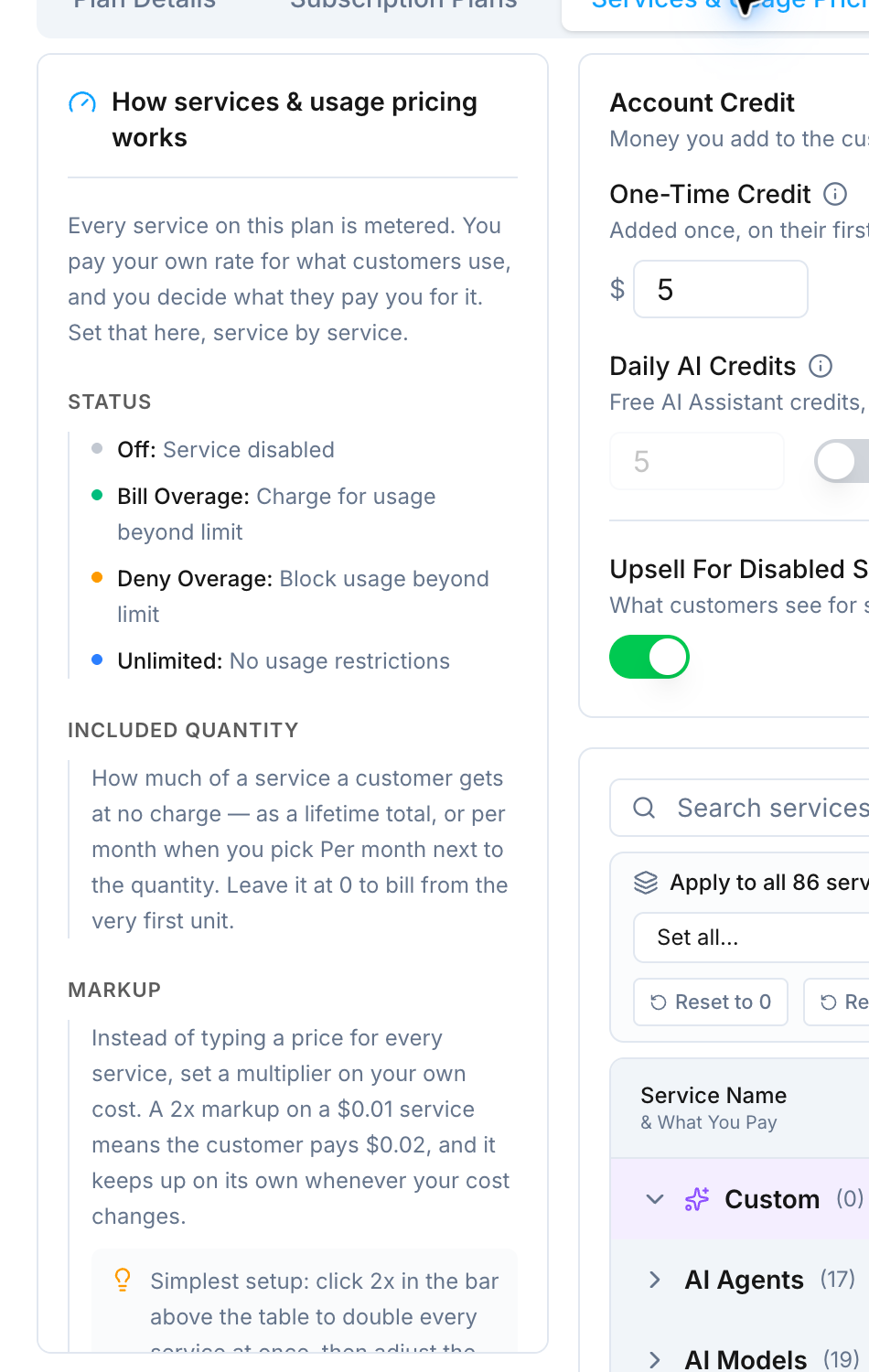
Votel screen explaining Off, Bill Overage, Deny Overage and Unlimited
Evidence: Votel’s four service states. The product labels Off, Bill Overage, Deny Overage and Unlimited in the plan editor.

Votel: passes

  • • Set Bill Overage for Email.
  • • Set Deny Overage for US SMS.
  • • Keep both rules in the same plan configuration.

HighLevel: needs an additional policy layer

  • • The reviewed flow shows shared credit.
  • • It also shows markup by usage area.
  • • It does not show the equivalent per-service bill-or-block choice beside separate Email and SMS allowances.

04 · CUSTOMER PRICE

Can an operator audit the cost and the customer rule in one place?

HighLevel

  • • Rebilling is configured by usage area.
  • • Good for setting a markup policy.
  • • The sales rule is distributed across credits and rebilling screens.

Votel

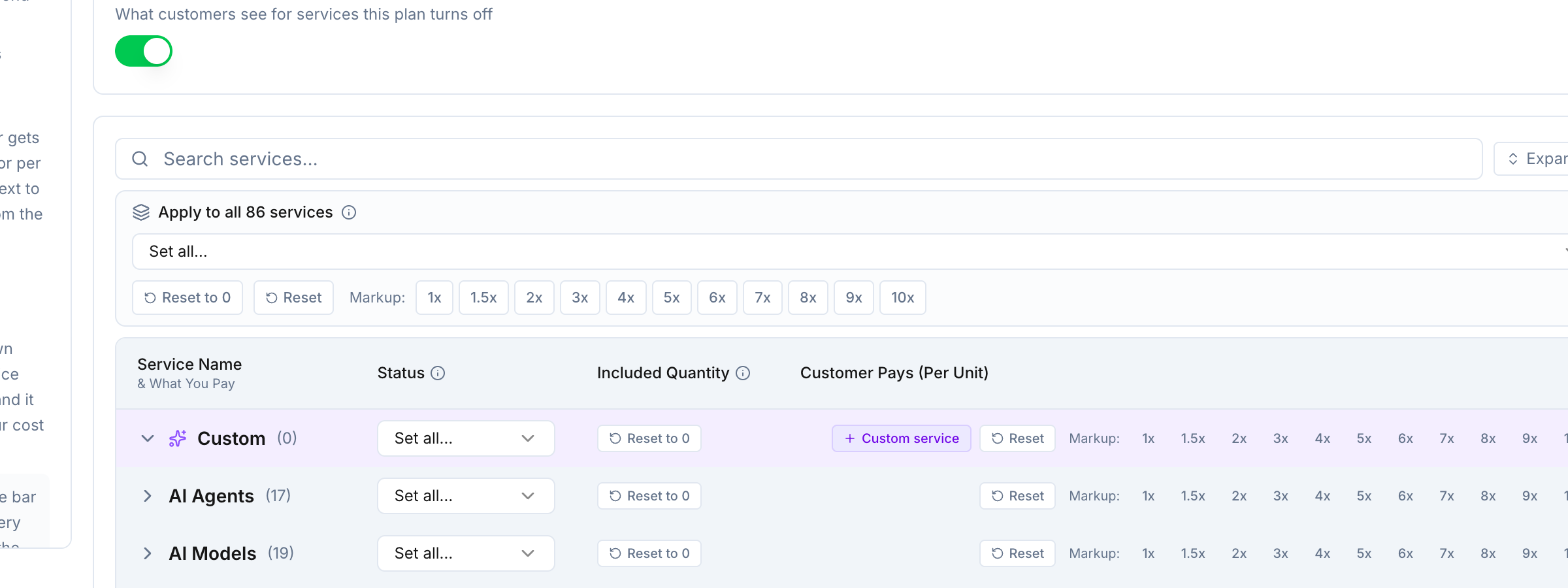
  • • Status, allowance and customer unit price share one row.
  • • Agency cost and customer rule are easier to audit together.
  • • Bulk actions are available across all 86 services.
Zoomed Votel service pricing table with Messaging and Phone categories, status, included quantity and customer price columns
Evidence: Votel’s service table. Messaging and Phone are listed as categories. The visible column headings are Status, Included Quantity and Customer Pays (Per Unit), with bulk actions for all 86 services.

05 · REBUILD AND PLAN DEFAULTS

Both can start a client account; their plan-level controls are shaped differently.

Question HighLevel Votel
Baseline build Attach an account snapshot and choose product-feature access. Link snapshots from Sub-Account Defaults within the plan editor.
Interface defaults Plan and broader agency settings are handled across configurator sections. Plan editor includes sidebar, top bar, getting-started guide and landing-page defaults.
Existing subscribers Test changes against the selected V1/V2 billing architecture. Editor includes a deliberate Sync Subscribers action.

06 · FAIR READING

HighLevel is not a weak SaaS tool—it targets a different default model.

Choose HighLevel when

  • • The offer is a base subscription plus shared usage credit.
  • • You already operate HighLevel snapshots, sub-accounts and Stripe/V1 or V2 billing.
  • • Bundled platform access matters more than separate unit entitlements.

Choose Votel when

  • • Sales copy promises included units by service.
  • • One service must bill overage while another hard-stops.
  • • You want status, allowance and selling price visible together.

07 · VERDICT

For this specific offer, Votel wins on visible service-level control.

Winner for this test: Votel

Why Votel wins this test

  • • Separate included quantity for a service
  • • Explicit Bill Overage or Deny Overage behaviour
  • • Customer price shown with the allowance and status

Where HighLevel is still a fit

  • • Base subscription plus a shared usage balance
  • • Existing HighLevel snapshot and billing workflow
  • • An offer that does not promise service-by-service unit entitlements

Scope: live interface walkthroughs, September 2026. Product behaviour changes; test a controlled purchase before making customer promises.

More in this series: GoHighLevel vs Votel, GoHighLevel Voice AI vs Votel AI, connecting Votel to GoHighLevel and migrating from GoHighLevel to Votel.